
Ph.D. Dissertation Project | 2021
The Problem
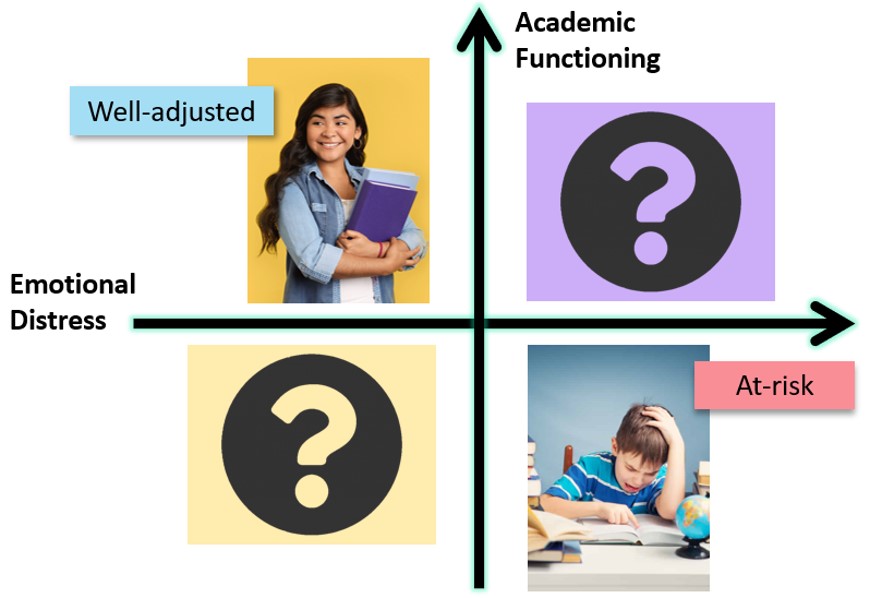
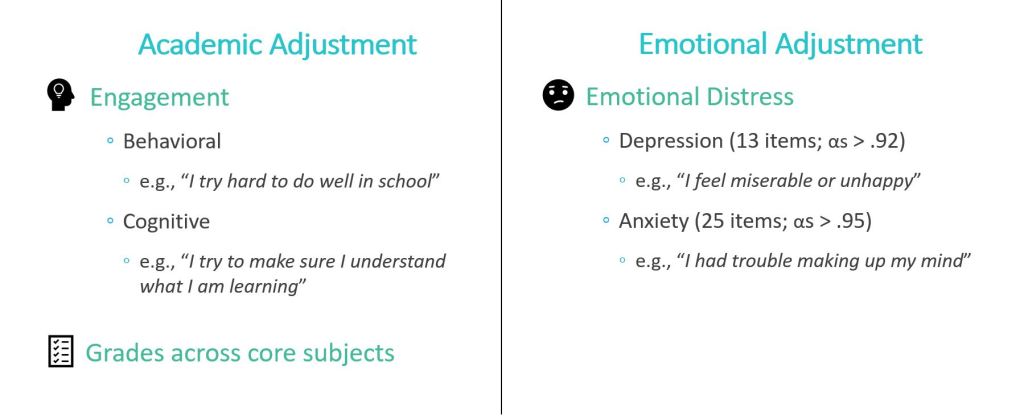
Although much research has shown academic adjustment (e.g., grades; engagement) and emotional adjustment (e.g., lack of depressive and anxiety symptoms) tend to co-occur (e.g., Cheung et al., 2020; Foley et al., 2017; Gumora & Arsenio, 2002; Ma, 1999; Ramirezet al., 2013; Vukovic et al., 2013; Wigfield & Meece, 1988), the correlation between the two is far from perfect. This suggests that not all teenagers are either “well-adjusted” (high academic adjustment and low emotional distress) or “at-risk” (low academic adjustment and high emotional disterss). But little is known as to what other adjustment patterns there are, and whether teenagers in different parts of the world (e.g., China) exhibit different adjustment patterns.
The Idea
My literature search revealed that two studies to date by Kim’s team (2015) and Roeser’s team (1998) have looked at the different adjustment patterns within the United States. Specifically, aside from the well-adjusted and at-risk patterns, both teams have identified a paradox pattern (high academic adjustment and high emotional distress) among American teenagers, with Kim’s team (2015) arguing that it may be particularly characteristic of Chinese American teens. In addition, Roeser’s team (1998) identified an academically uninvested pattern (low academic adjustment and low emotional distress) among his European- and African-American teenager sample, but this pattern was not found among Kim et al.’s Chinese American sample.
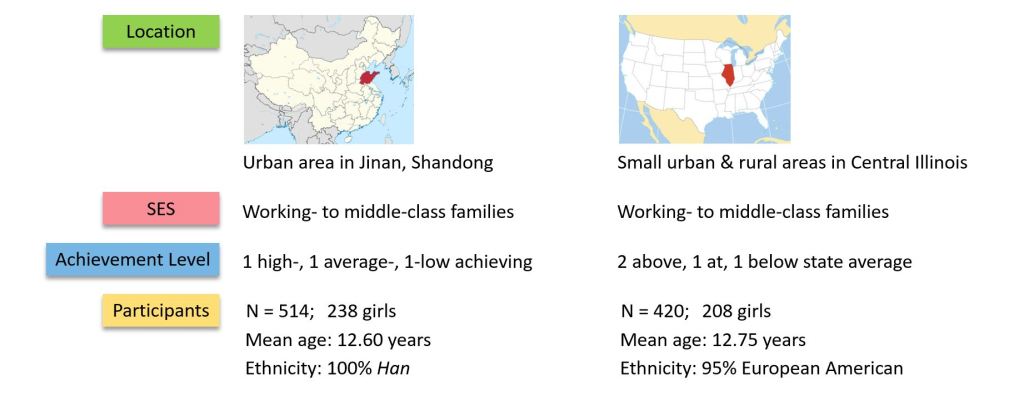
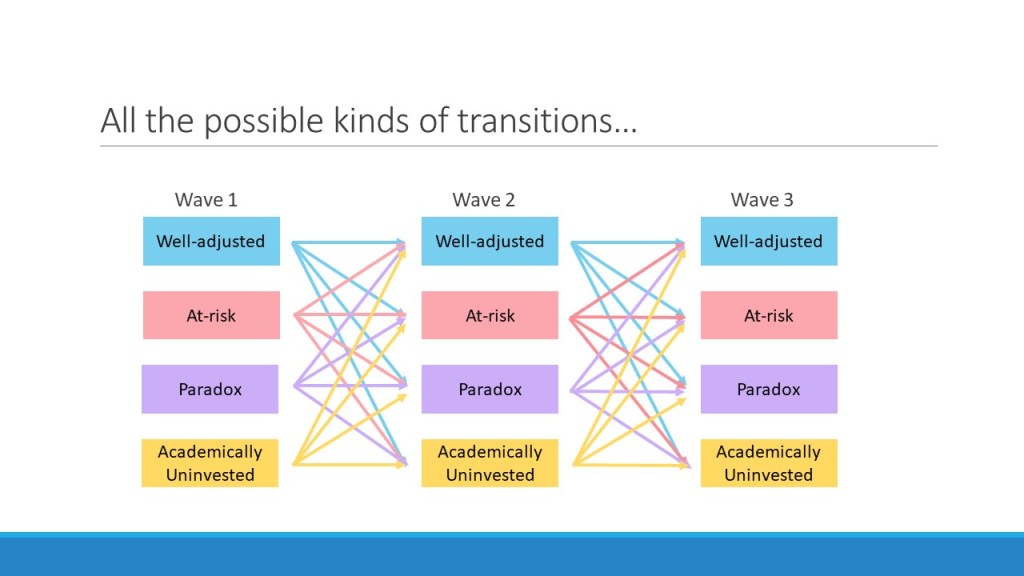
Based on the literature and the scarce empirical attention on the off-diagonal adjustment patterns (i.e., paradox and academically uninvested), I wanted to explore (1) whether these four adjustment patterns do exist not only in the United States, but also in other countries, such as China; (2) whether American and Chinese teenagers are more likely to exhibit certain adjustment patterns than others; and (3) whether teenagers’ adjustment patterns are stable across time.
Implications: The implications are twofold. Understanding the different types of adjustment patterns and their prevalence in not only the West but also the East is a key step to investigating what leads teenagers to exhibit one pattern over another. For example, if indeed Chinese (vs. American) teenagers were more paradox while American teenagers were more academically uninvested, what might Chinese and American parents and teachers be doing differently that contribute to this difference? What might be making some kids academically uninvested rather than well-adjusted? Importantly, knowing the types and prevalence of different adjustment patterns will also inform intervention efforts that aim to optimize teenagers’ well-being by effectively targeting specific areas in which they need help (e.g., what paradox kids need may not be what academically uninvested kids need).
The Method
Objectives:
- Explore the types and prevalence of different adjustment patterns in the United States and China
- Examine the stability of teenagers’ adjustment patterns
Participants:
Procedure:
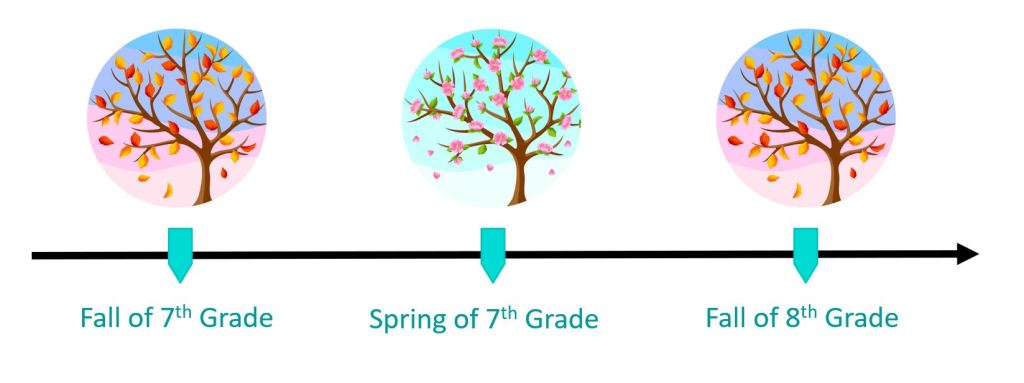
American and Chinese middle schoolers completed a survey in school every six months beginning in the fall of 7th grade.
Measures:
Statistical Analysis:

The Results
Key Insights
- Suggesting cultural universality…
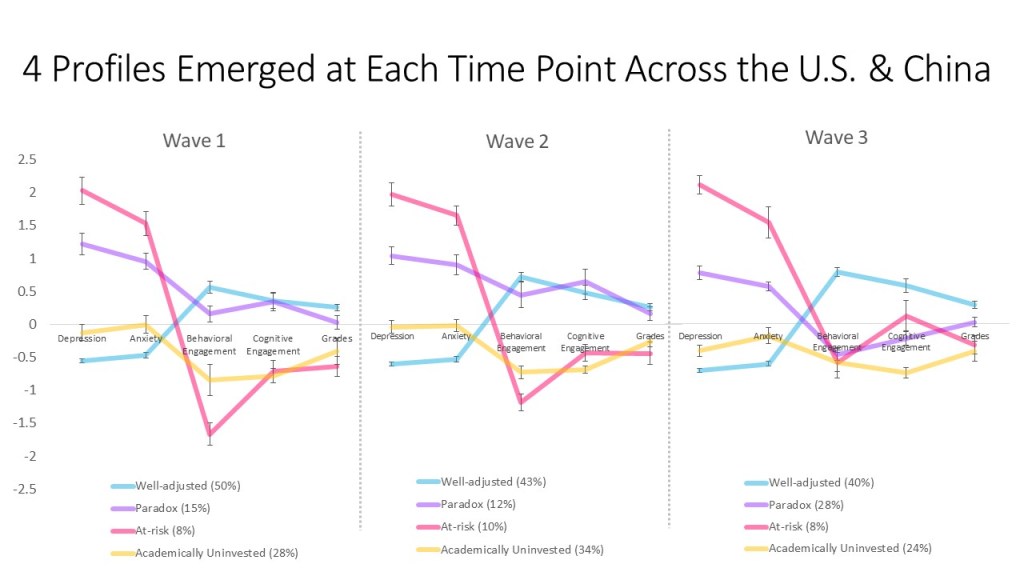
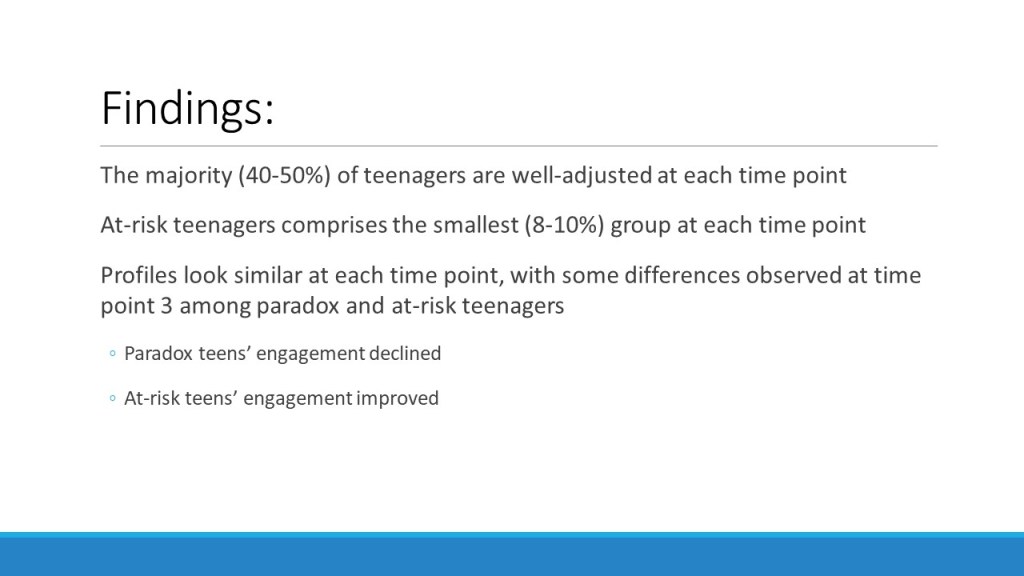
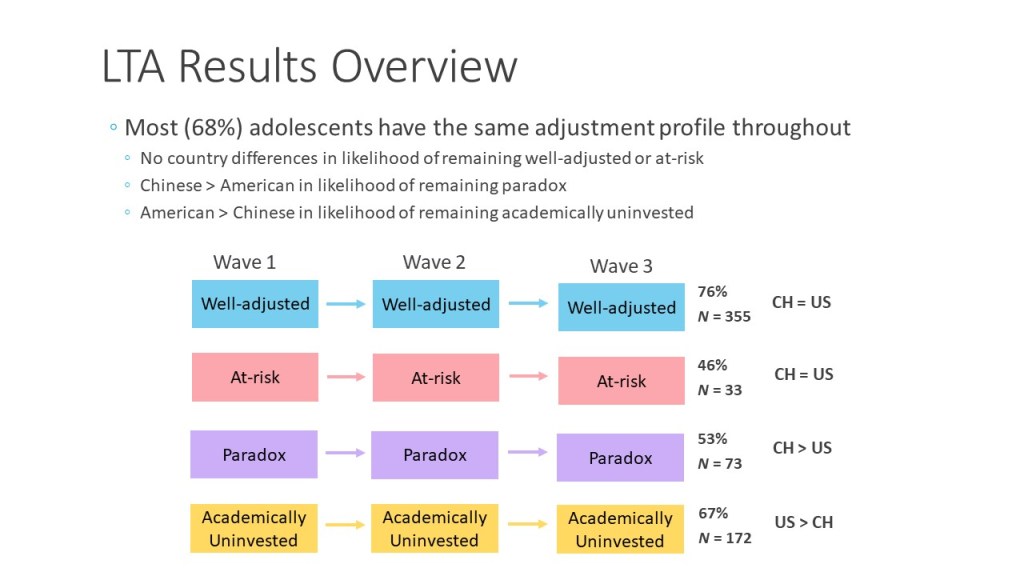
- Most teenagers across the United States and China are well-adjusted, with a small group being at-risk
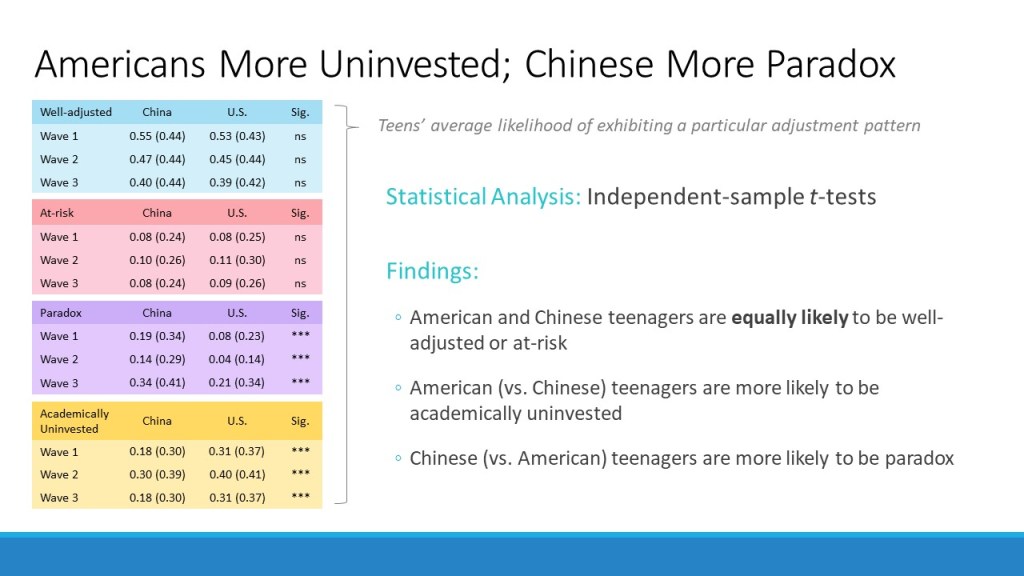
- Neither American nor Chinese teenagers were more likely than the other to be well-adjusted or at-risk
- Most teenagers’ adjustment profiles tend to remain stable over time
- Suggesting cultural specificity…
- American (vs. Chinese) teenagers were more likely to be uninvested in school and remain so over time
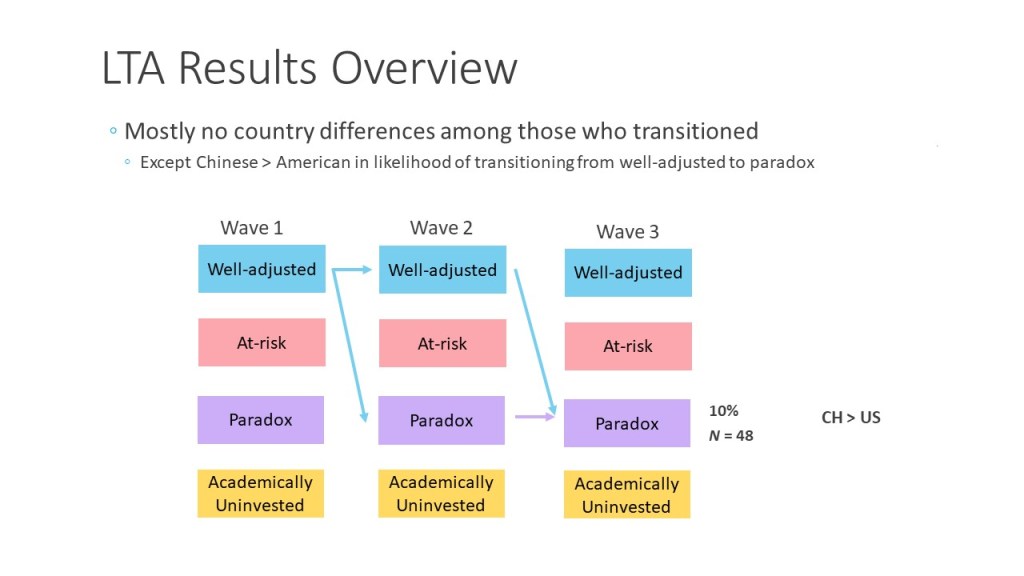
- Chinese (vs. American) teenagers were more likely to be paradox and remain so over time
Implications & Future Directions
These results show that indeed, not all teenagers were either well-adjusted or at-risk, with a sizeable group falling into the paradox group and the academically uninvested group. As such, interventions aiming to optimize teenagers’ adjustment should not adopt a one-size-fit-all approach, but rather target the specific needs of teens with different adjustment profiles.
Moreover, given American (vs. Chinese) teenagers were more likely to exhibit the academically uninvested profile while Chinese teenagers were more likely to exhibit the paradox profile, future research should examine (1) the factors (e.g., school systems, parents) that predict these profiles, and (2) the long term consequences of these profiles – for example, is the paradox pattern (with high academic achievement and performance despite high levels of emotional distress) sustainable? And will academically uninvested teenagers nevertheless become happy and successful adults?
 Janice Ng