
Client: Legion Athletics | My Role: User Researcher | 2021
The Problem
Aiming to help people achieve the body of their dreams via science-based training methods, Legion Athletics has two fitness programs – Bigger, Leaner, Stronger (BLS) for men and Thinner, Leaner, Stronger (TLS) for women, along with other products (e.g., supplements, meal plans). Despite the company’s significant growth since its launch in 2014, little is known as to what exactly contributes to customers’ adherence and success with its fitness programs and what influences their purchasing decisions for other products.
The Idea
It is known that people’s goals and mindsets are important drivers of their behaviors (Locke, 1996), and my literature search suggested that the same applies to health-related behaviors, such as exercising (John-Henderson et al., 2020; Orvidas et al., 2018). With this in mind, I wondered whether Legion’s customers’ goals and mindsets regarding their strength and body are associated with their engagement in the BLS/TLS programs and purchasing behaviors.
Implications: If specific goals and mindsets were shown to be important, the results of my study will inform future editions of the BLS and TLS program. For example, content targeting specific goals and mindsets may be added to the programs to promote engagement in and adherence to the programs, ultimately increasing customers’ satisfaction with their results and purchasing of other Legion’s products.
The Method
Objectives:
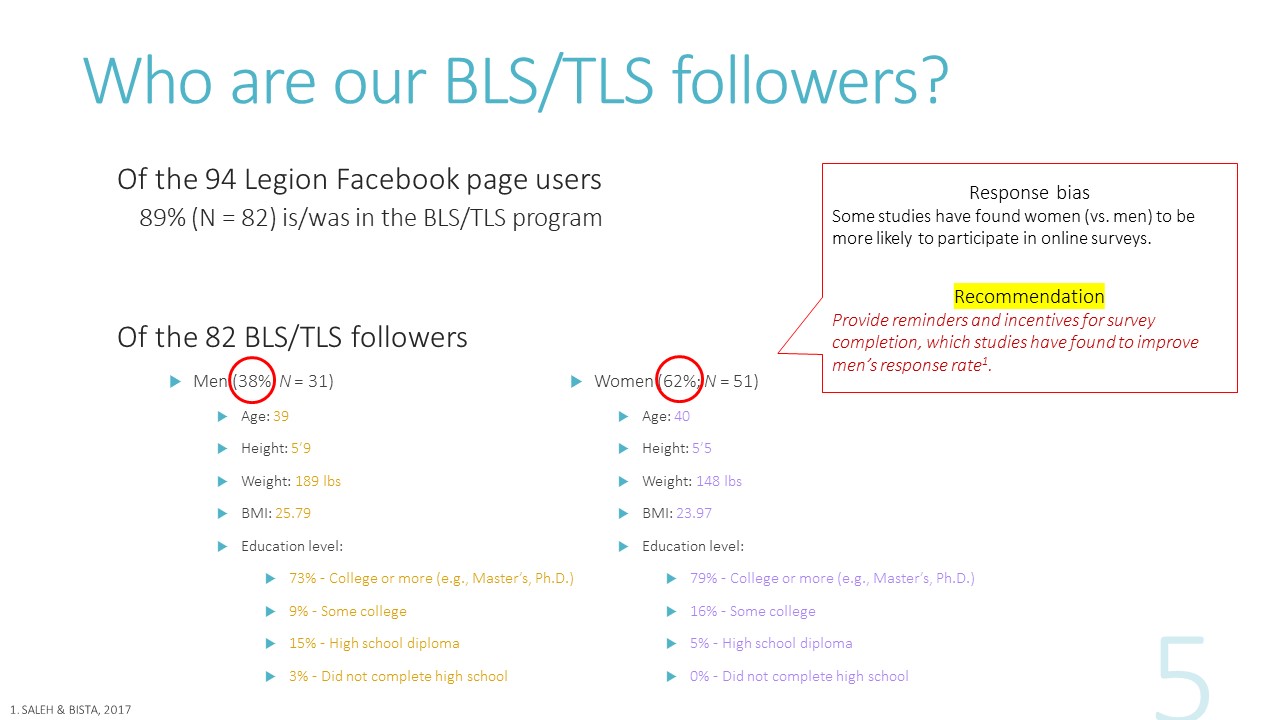
- Identify who the BLS/TLS followers are
- Explore characteristics of our BLS/TLS followers (e.g., goals and mindsets) that are associated with their engagement and satisfaction with Legion
Participants:
N = 94
Recruited on Legion’s Facebook pages
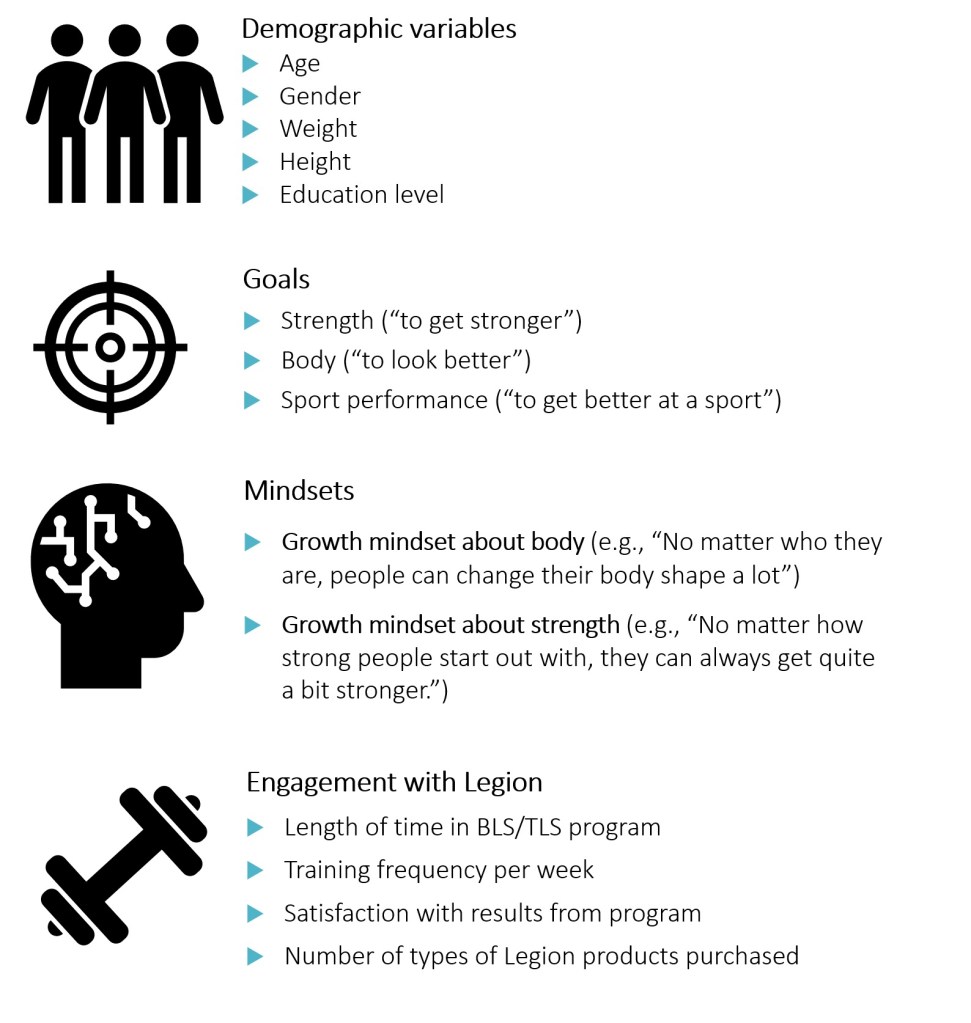
Survey Measures:
The Results – Specific Insights and Recommendations
Key Insights
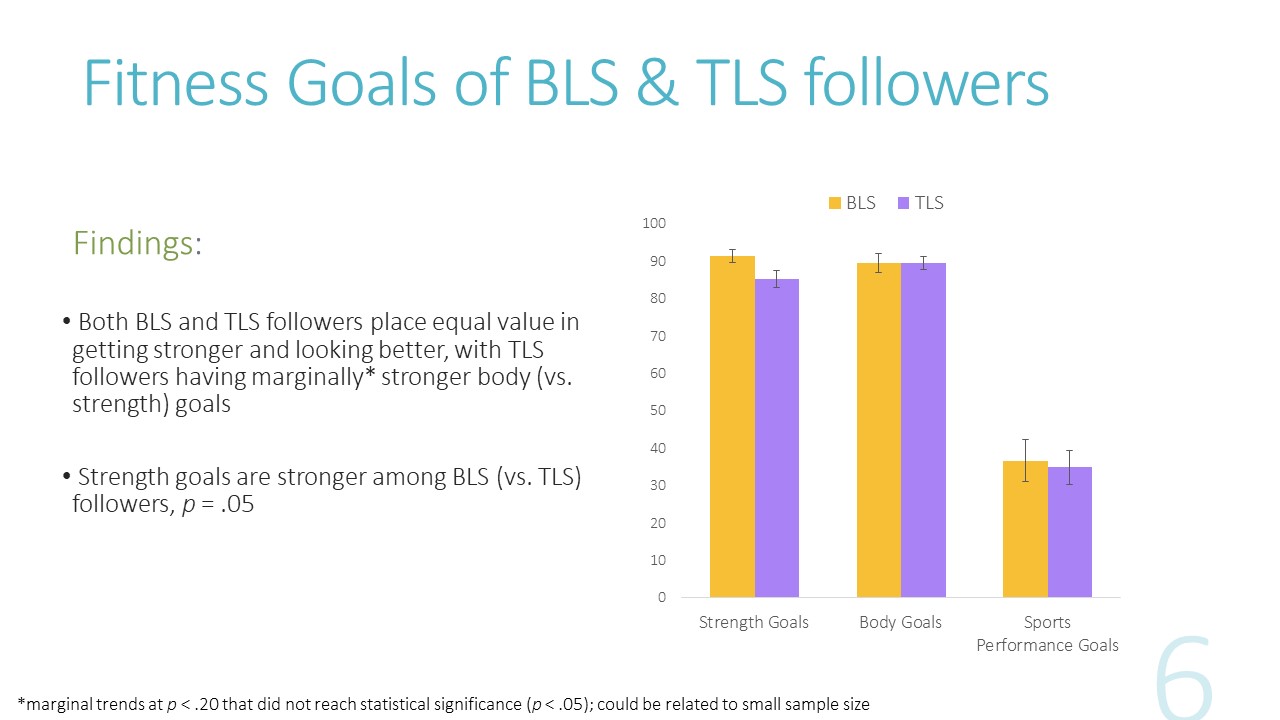
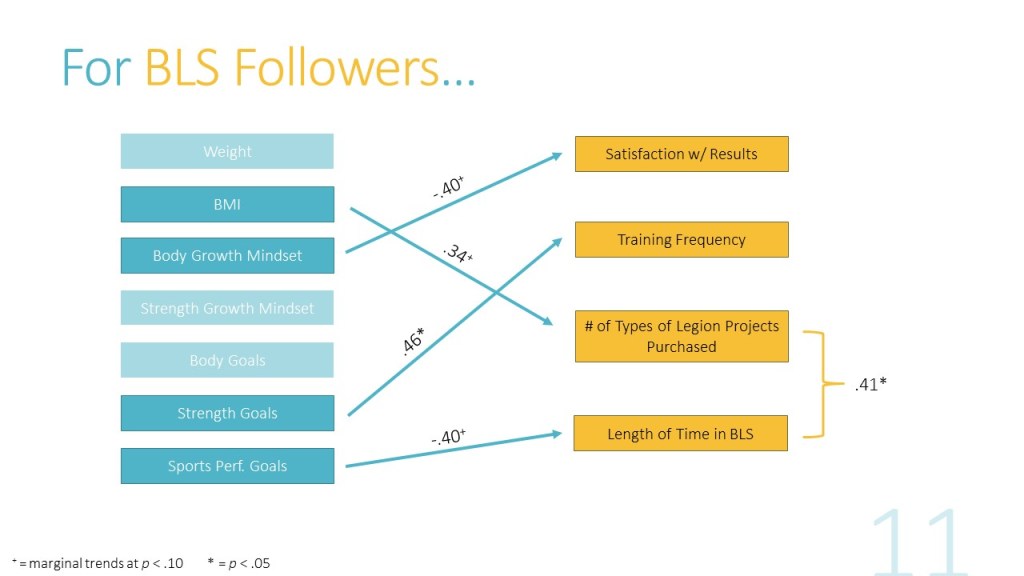
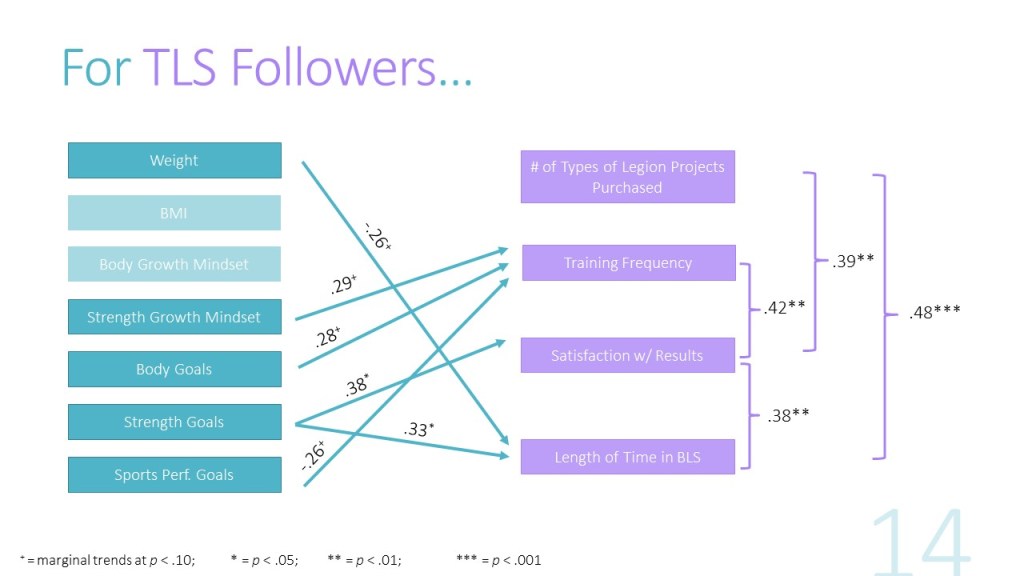
- Men (vs. women) have stronger strength goals (i.e., to get stronger), which predicts
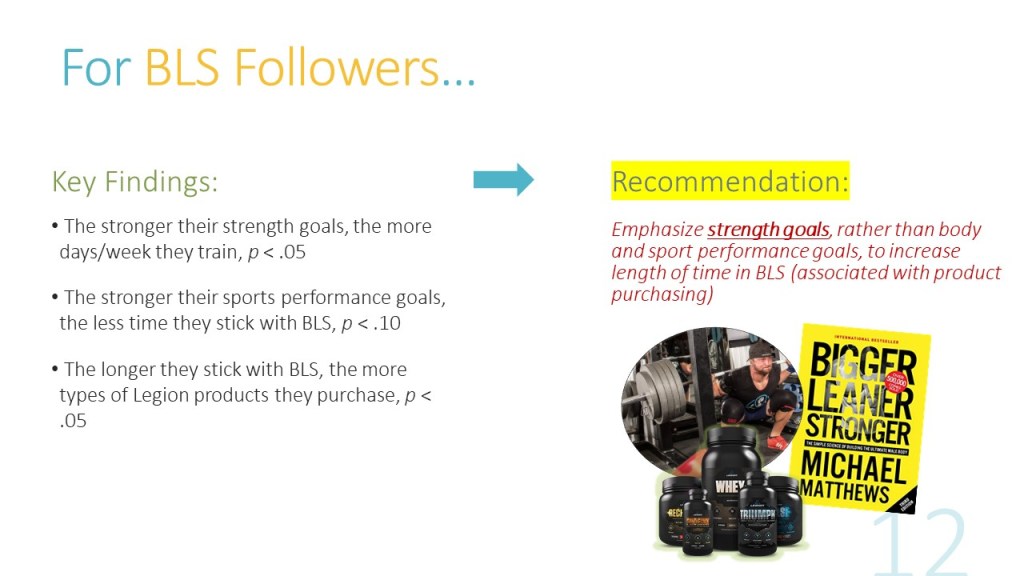
- (for men) training frequency
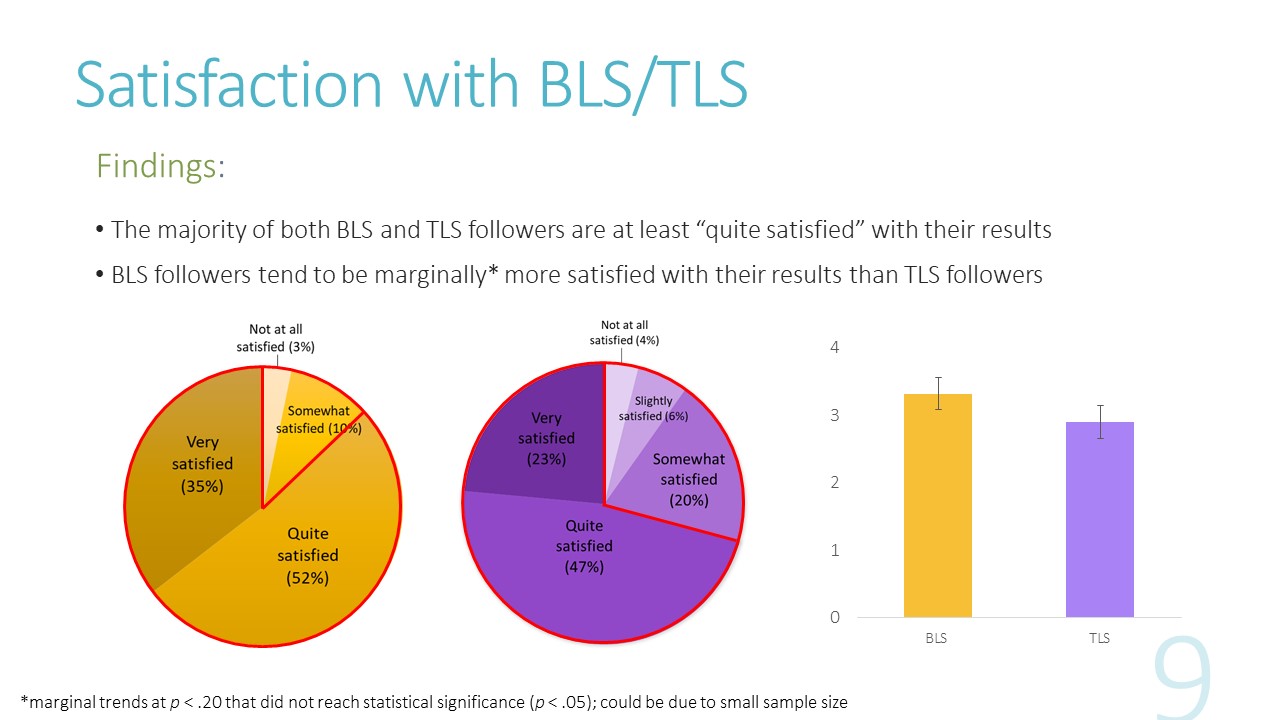
- (for women) length of time in TLS & satisfaction with results
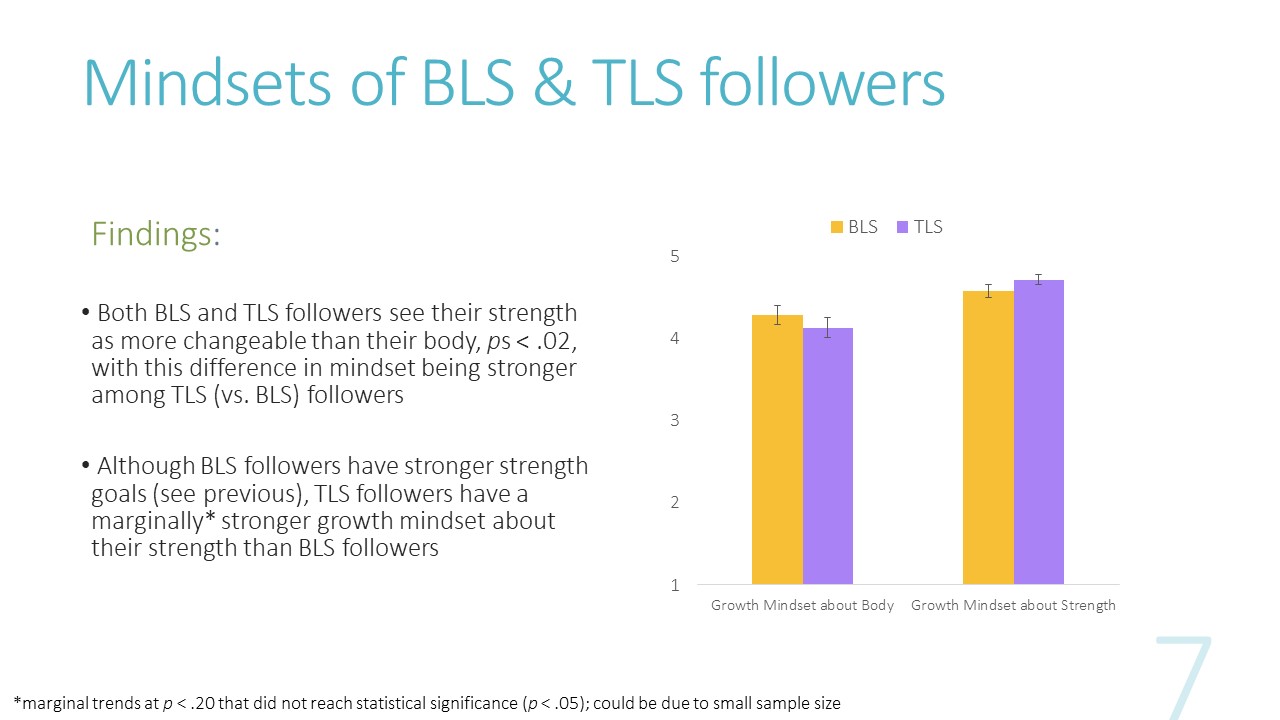
- Strength is seen as more changeable than body among both genders. But that is especially true among women, for whom growth mindset about strength predicts training frequency, which is positively correlated with satisfaction with results and Legion product purchasing behaviors
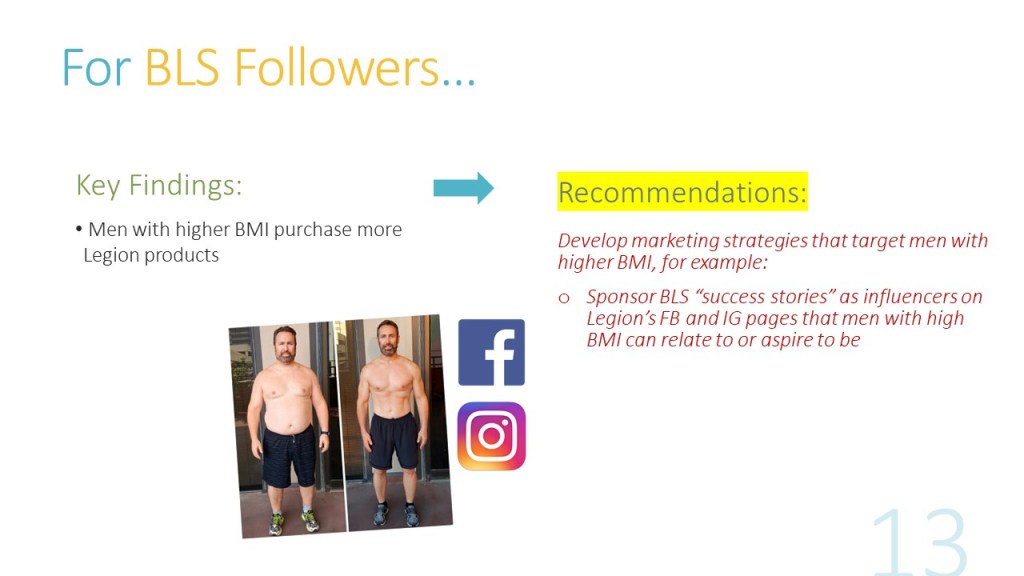
- Men with a higher BMI purchase more Legion products
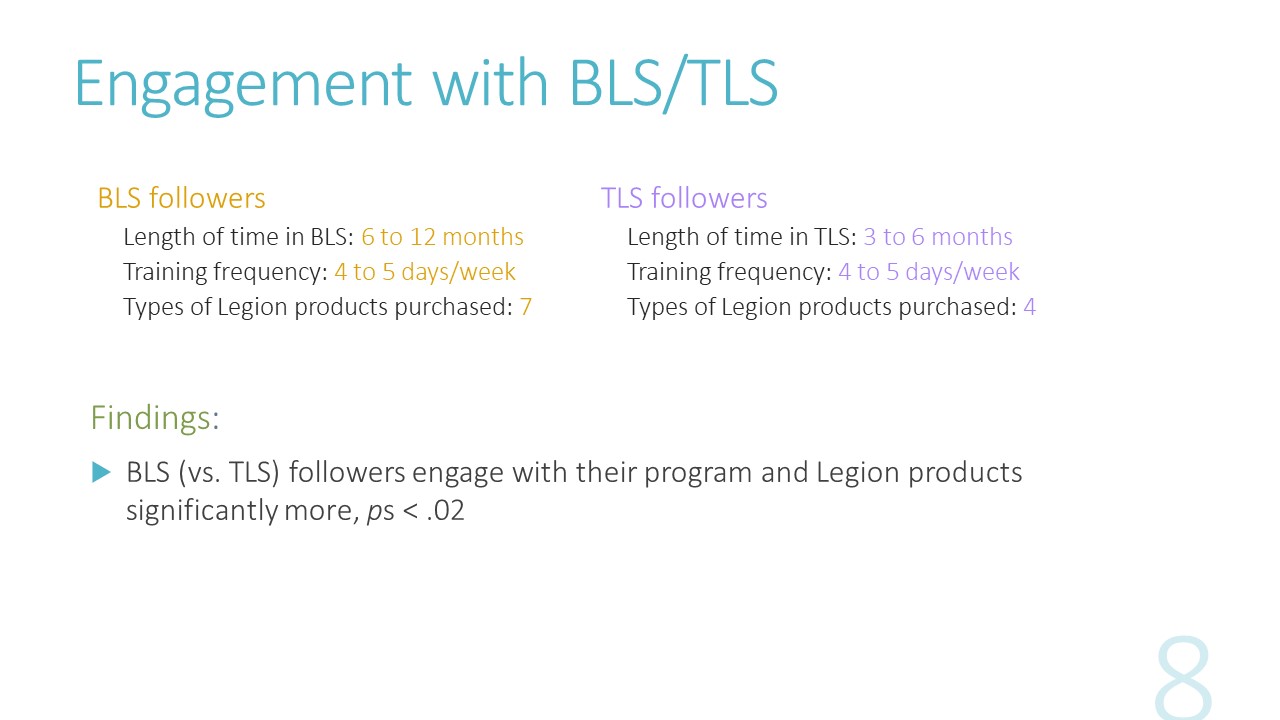
- Women, particularly those who higher weight, tend to engage less in their program. Engagement in BLS/TLS is positively correlated with purchasing of Legion products similarly among both genders
Key Recommendations – BLS
- BLS seems mostly good as is, BUT perhaps
- Emphasize strength goals, rather than body and sport performance goals, to increase length of time in BLS (associated with product purchasing)
- Develop marketing strategies that target men with higher BMI, for example:
- Sponsor BLS “success stories” as influencers on Legion’s FB and IG pages that men with high BMI can relate to or aspire to be
Key Recommendations – TLS
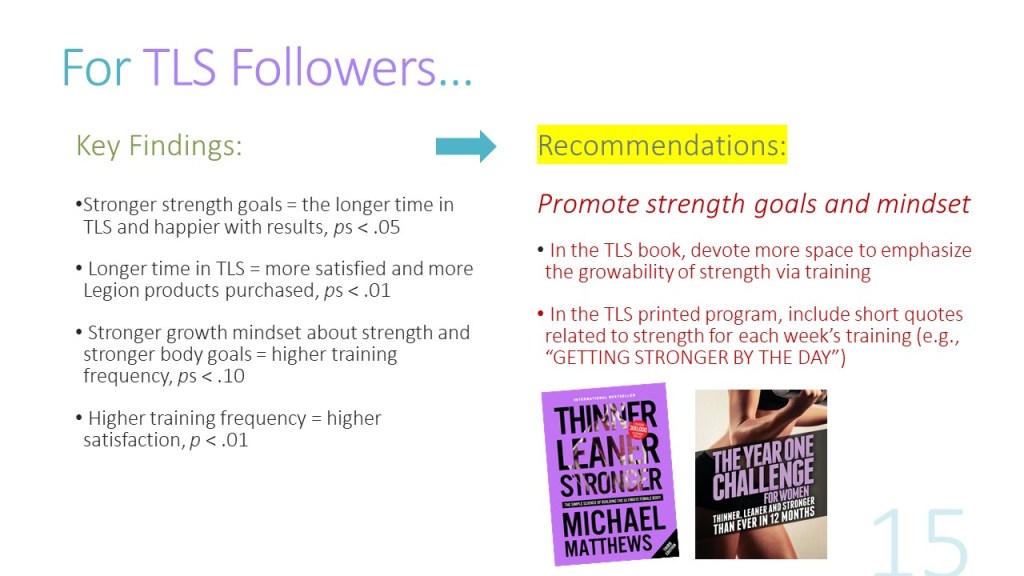
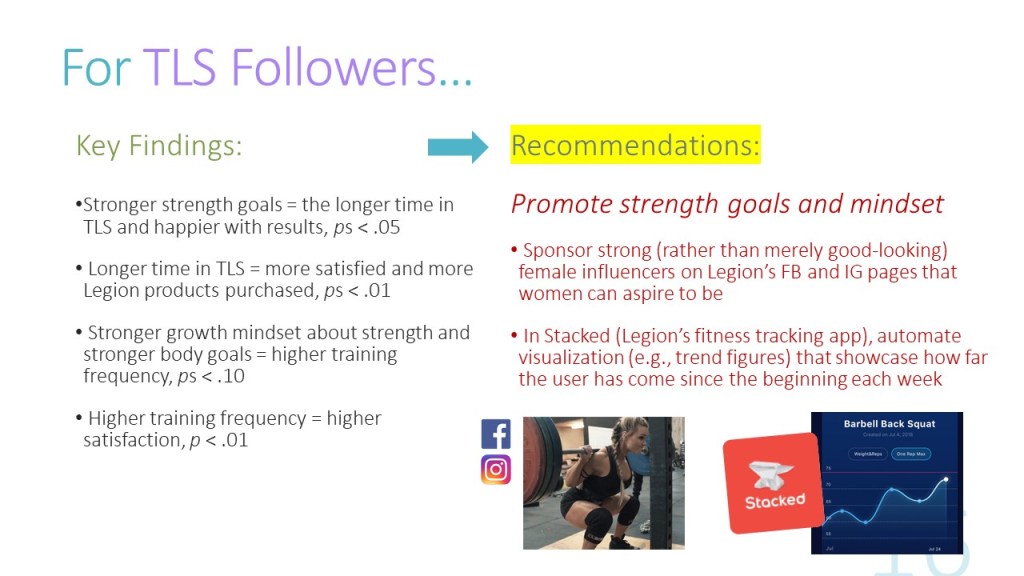
- Promote strength goals and mindset in TLS
- In the TLS book, devote more space to emphasize the growability of strength via training
- In the TLS printed program, include short quotes related to strength for each week’s training (e.g., “GETTING STRONGER BY THE DAY”)
- Sponsor strong (rather than merely good-looking) female influencers on Legion’s FB and IG pages that women can aspire to be
- In Stacked (Legion’s fitness tracking app), automate visualization (e.g., trend figures) that showcase how far the user has come since the beginning each week
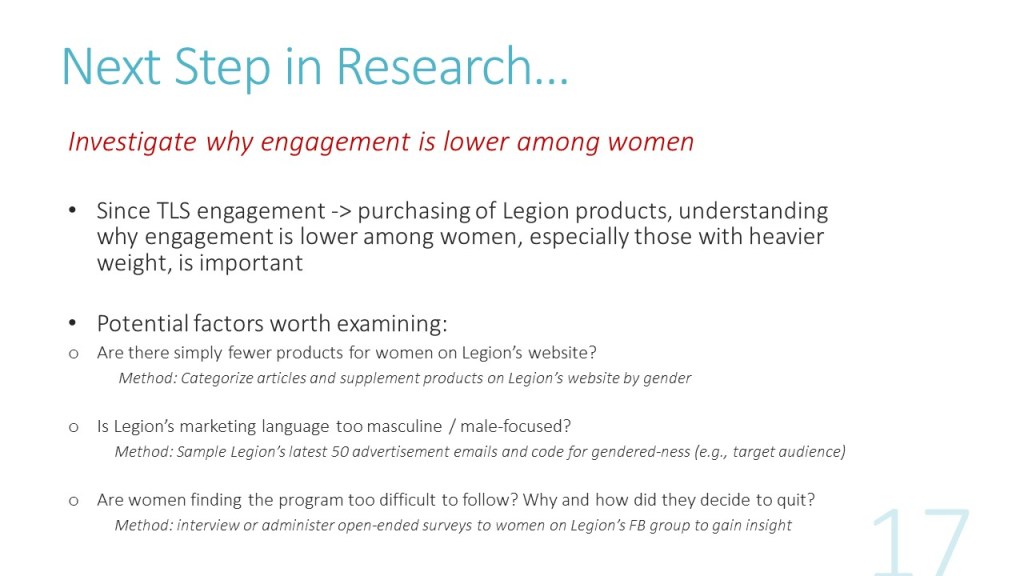
- Investigate why engagement is lower among women
- Since BLS/TLS engagement is positively correlated with purchasing of Legion products, understanding why engagement is lower among women, especially those with higher weight, is important
- Potential factors worth examining:
- Are there simply fewer products for women on Legion’s website?
- Method: Categorize articles and supplement products on Legion’s website by gender
- Is Legion’s marketing language too masculine / male-focused?
- Method: Sample Legion’s latest 50 advertisement emails and code for gendered-ness (e.g., target audience)
- Are women finding the program too difficult to follow? Why and how did they decide to quit?
- Method: interview or administer open-ended surveys to women on Legion’s FB group to gain insight
- Are there simply fewer products for women on Legion’s website?
Reflection – What I learned & What I would do differently next time
*Collect more qualitative user feedback to gain insights on:
- What led to users’ discovery and ultimately purchasing of the BLS/TLS?
- Implications: What Legion is / should be doing to garner more interest and purchasing of the programs
- What reasons drove users’ decision to stay/quit the BLS/TLS?
- Implications: Possible intervening points to retain users and potentially enhance users’ experience in the programs
- What are the themes in our female users’ struggles to adhere to the TLS program?
- Implications: Possible intervening points to retain female users and increase their engagement with the TLS and other Legion products
 Janice Ng