
My Role: Lead Researcher | Advisor: Dr. Eva M. Pomerantz | 2015-2021
The Problem
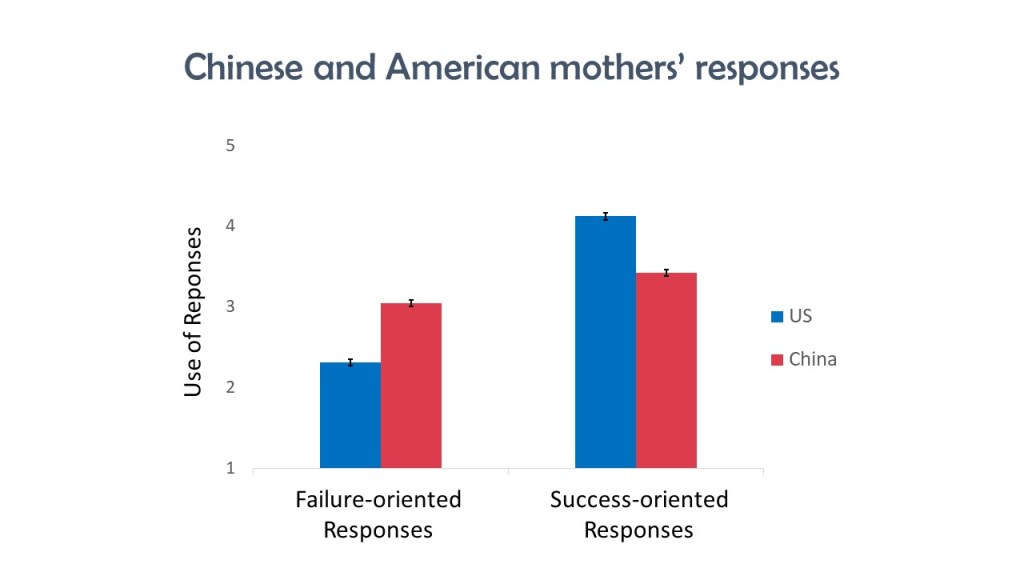
Prior research has consistently documented that American and Chinese parents tend to respond differently to their children’s performance in school (for a review, see Pomerantz et al., 2014) . Specifically, American parents tend to use more success-oriented responses (i.e., highlight their children’s successes and downplay their failures), whereas Chinese parents tend to use more failure-oriented responses (i.e., highlight their children’s failures and downplay their success). However, no one has looked into why.
The Idea
Parents’ practices are not random, but are driven by their goals for their children that are based on the demands of the society in which they reside (e.g., Bornstein & Lansford, 2010; Darling & Steinberg, 1993). Thus, given the differences in culture and societal structure between the United States and China, it is possible that American and Chinese parents have different goals for their children. And these goals may in turn drive how parents respond to their children’s performance.
Although not many researchers have studied the differences in American and Chinese parents goals, there are some research and theories suggesting that children’s self-worth is prioritized among American parents, but not as much among Chinese parents (for a review, see Heine et al., 1999). Similarly, although have not yet been empirically examined, Heine and colleagues (1999) argue that self-improvement is far more prioritized in East Asia than it is in the West.
Given my literature review, I wanted to test whether the differences in American and Chinese parents’ responses to their children’s performance are indeed due to the differences in their self-worth and self-improvement goals.
Objectives:
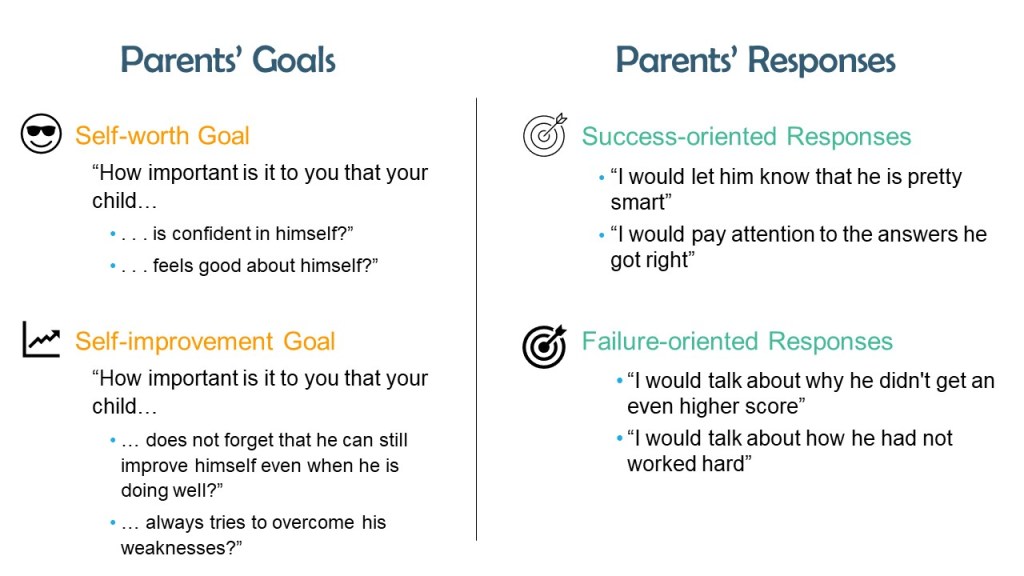
Study 1 – Determine whether American and Chinese parents’ self-worth and self-improvement goals are associated with their responses to children’s performance
Study 2 – (based on results of Study 1) Determine whether American and Chinese parents’ self-worth and self-improvement goals indeed drive how they respond to children’s performance (e.g., will American parents with self-improvement goals focus more on children’s failures than success?)
Implications: The implications of this endeavor are twofold. First, this study itself is part of the movement beyond simply documenting cultural differences, but actually understanding the processes that underlie them.
Second, research has shown that the way parents respond to children’s performance have downstream consequences for children’s academic and emotional functioning (e.g., F. Ng et al., 2007). Given the implications of parents’ responses, future interventions that aim to change the way parents respond may benefit from targeting parents’ goals rather than simply advising parents how to respond. In the latter case, parents may simply revert back to the responses in line with their default goals.
Study 1 – Methods
Participants:
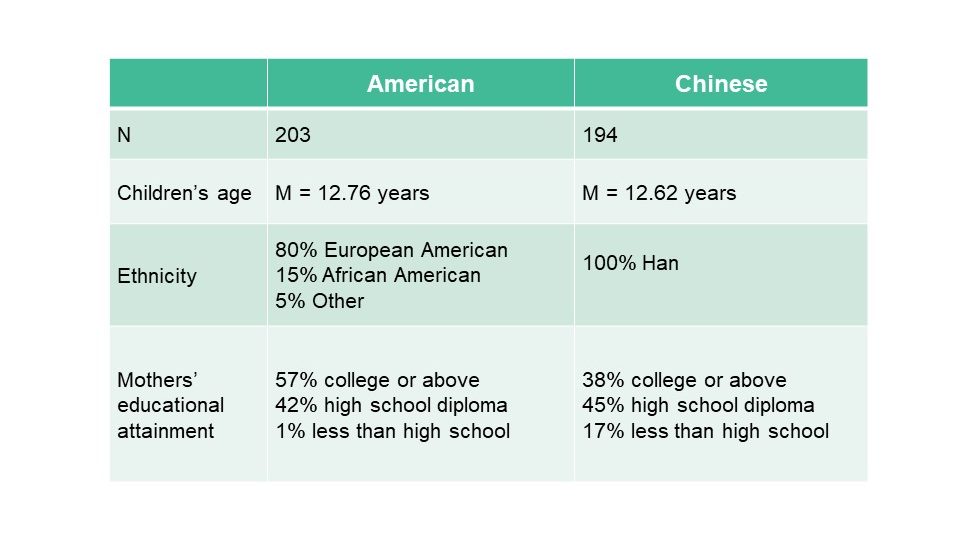
Procedure:
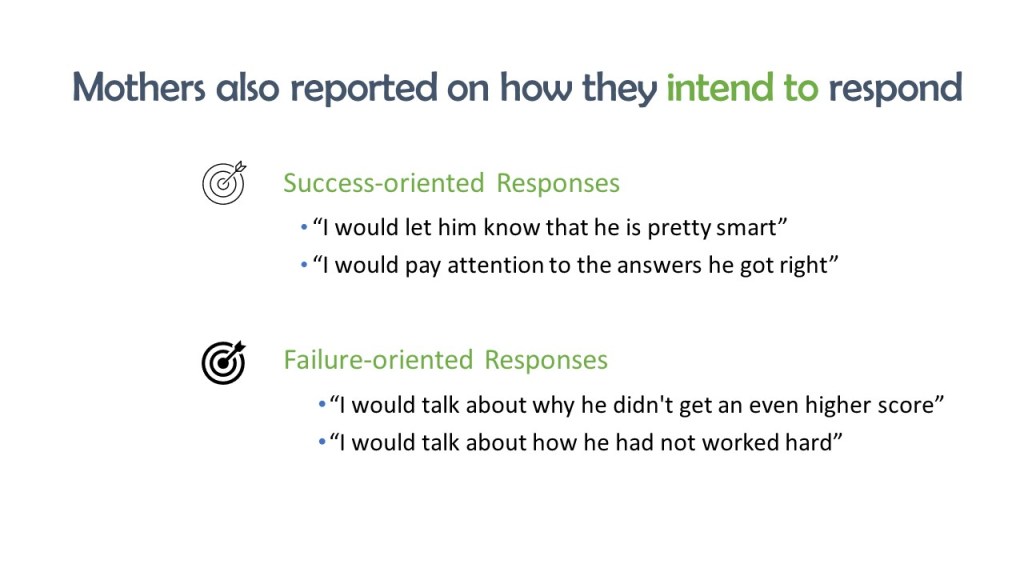
American and Chinese mothers filled out a questionnaire on their goals and responses to children’s performance when their children entered 7th grade.
Measures:
Statistical Analysis:

Study 1 – Results
Study 1 – Key Insights
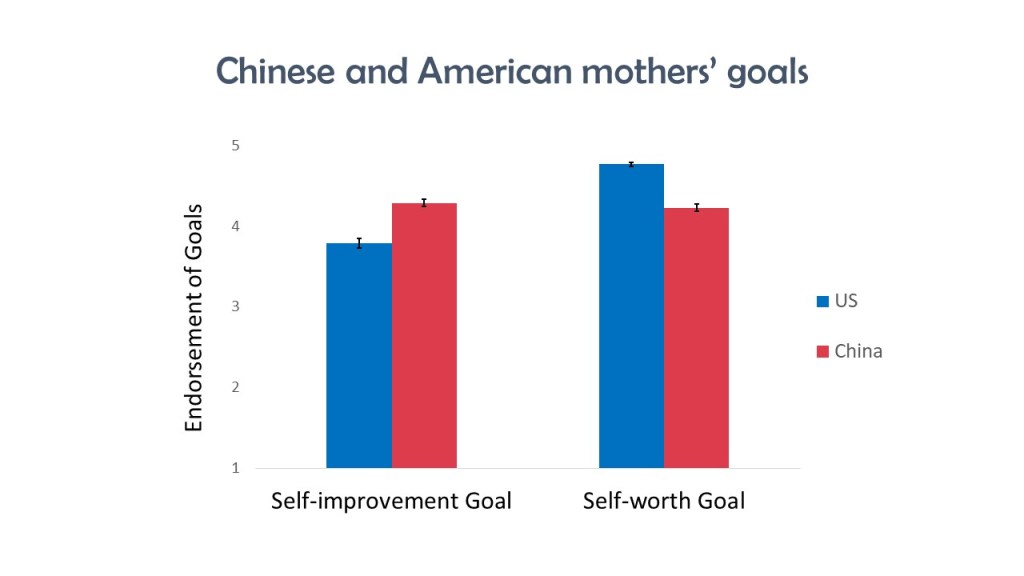
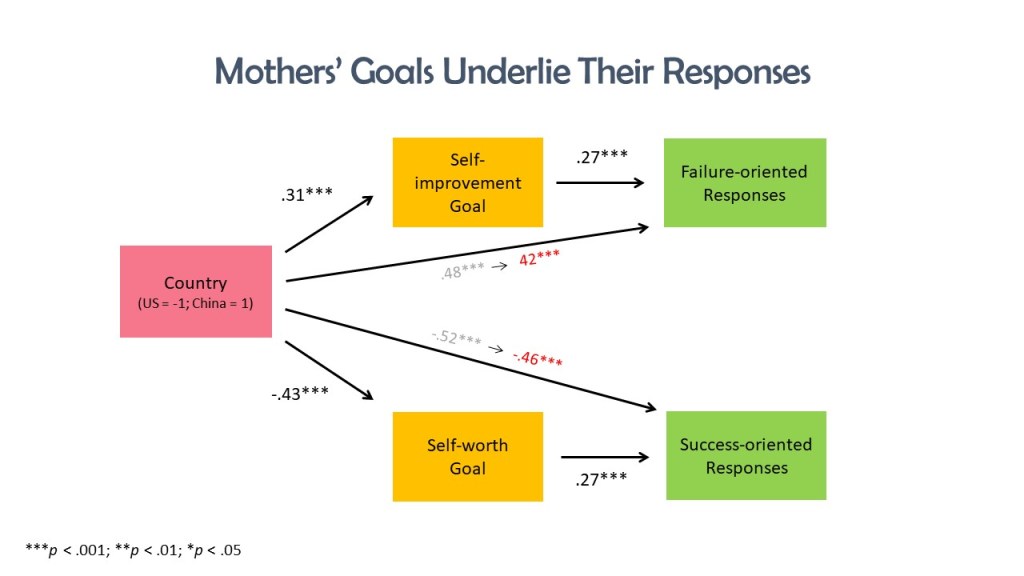
- While children’s self-worth and self-improvement were both important to American and Chinese parents, American parents saw children’s self-worth as more important than Chinese parents, who saw children’s self-improvement as more important
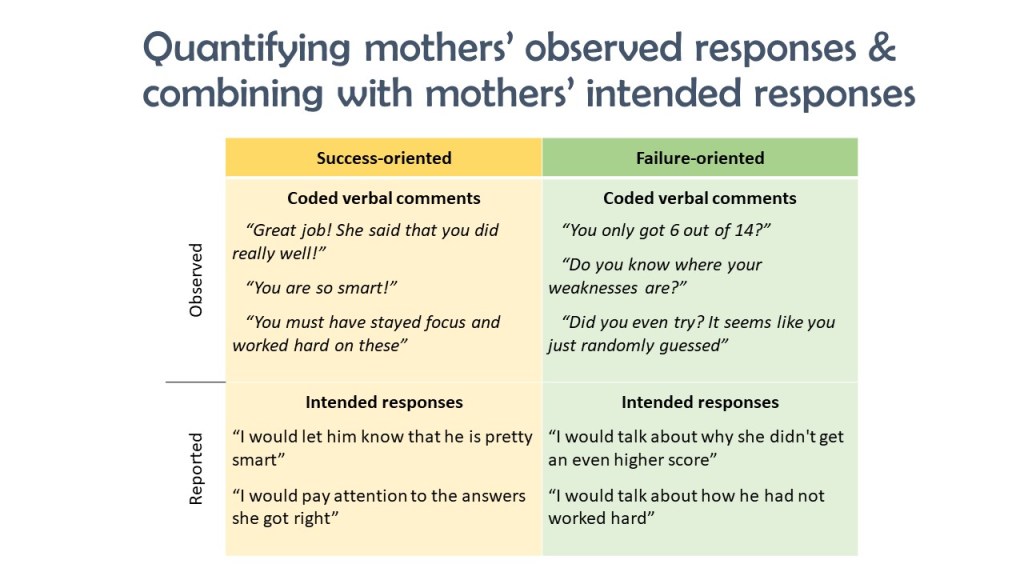
- While failure-oriented responses were lower than success-oriented responses among both American and Chinese parents, American parents tend to use more success-oriented responses than Chinese parents, who tend to use more failure-oriented responses, confirming prior research findings (F. Ng et al., 2007)
- The differences in American and Chinese parents’ success-oriented and failure-oriented responses were at least partially accounted for by the differences in their self-worth and self-improvement goals, respectively
Study 1 – Limitations and Next Step
Study 1 finds that parents’ goals are indeed associated with how they respond to children’s performance. However, two major limitations include:
- The two goals were measured at the same time, which makes “which causes which” unclear
- All variables relied on parents’ reports, which can be biased
- For example, it is hard to tell whether parents are reporting what they actually did, or what they intended to do
Next step:
Determine cause and effect: experimentally manipulate parents’ goals and observe how they respond to their children’s performance (Study 2)
Study 2 – Methods
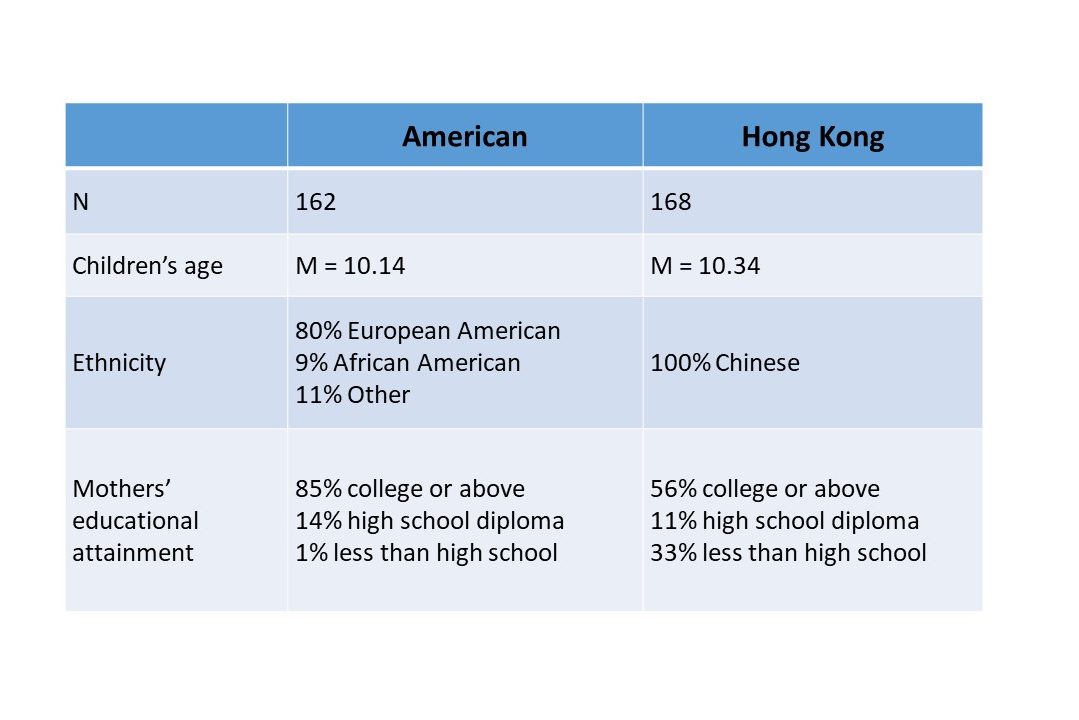
Participants:
Procedure:
Aim: Manipulate parents’ goals and observe their subsequent responses to children’s performance
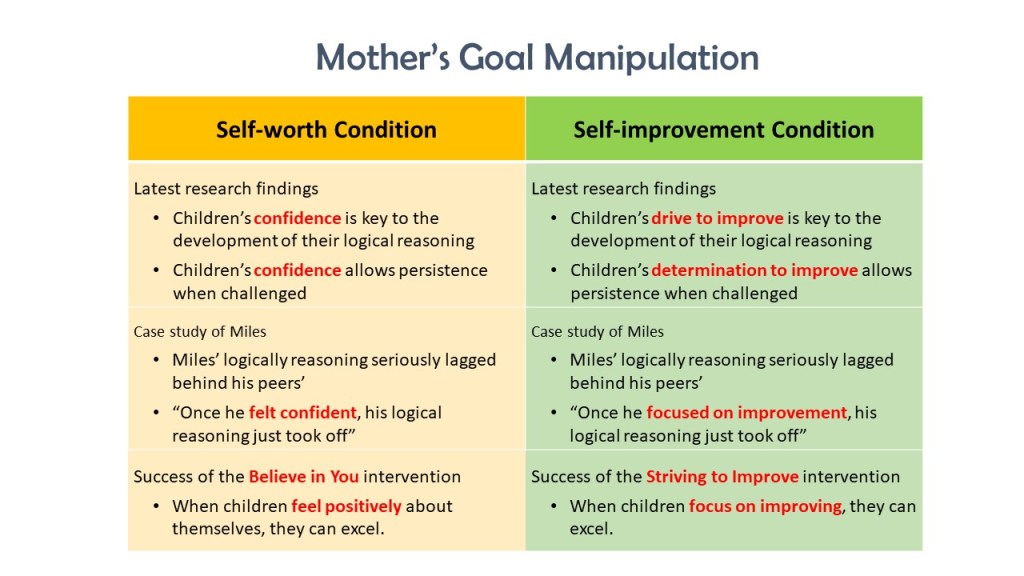
When mothers and their children arrive in the lab, they were asked to go into separate rooms by themselves. In the mother’s room, they were given one version of the two brochures I created that highlighted EITHER children’s confidence (self-worth condition) OR children’s striving for improvement (self-improvement condition) as being essential to their logical reasoning skills.
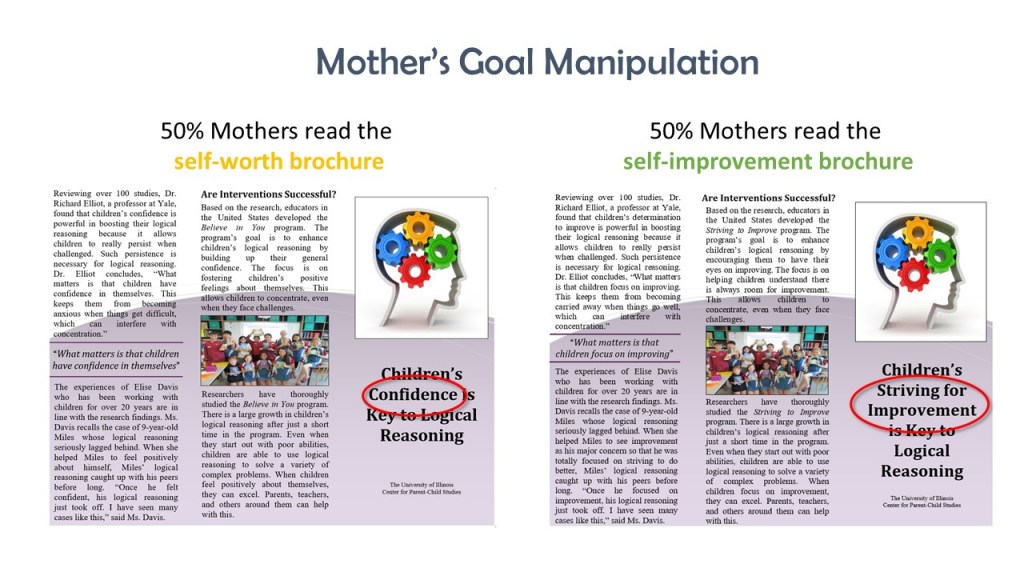
Both brochures were otherwise identical:
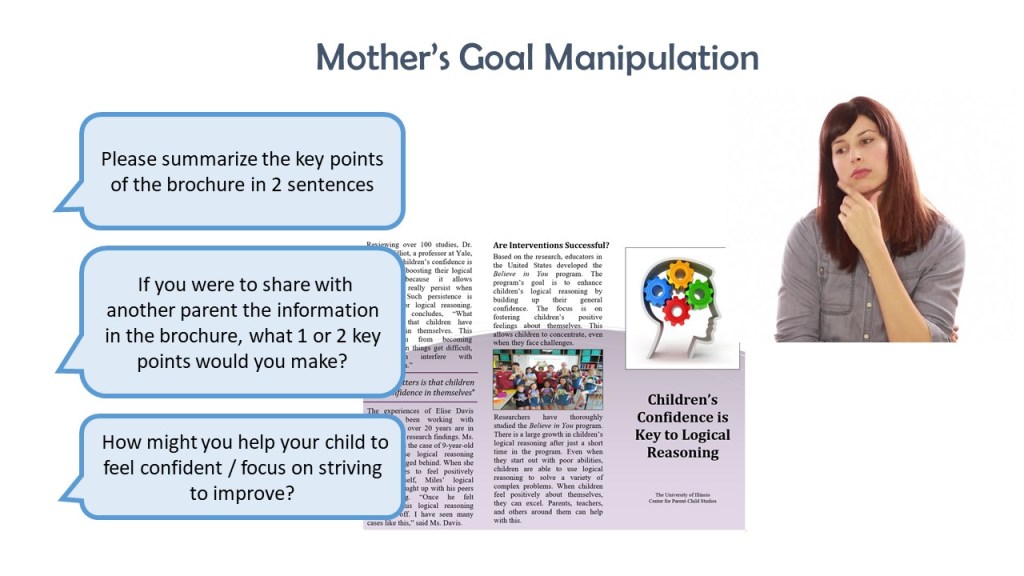
To ensure that mothers understood and processed the information in the brochure, they were asked:
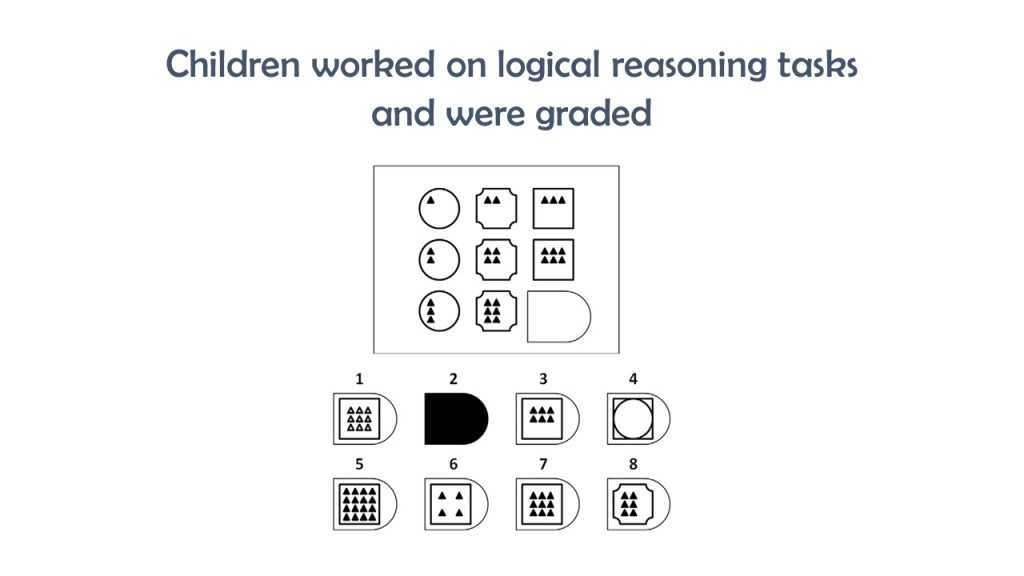
While parents were reading and processing their brochure, in the child’s room…
Mothers and children were then reunited, with children’s score and the set of puzzle task they worked on placed on the table if they wished to look at them.
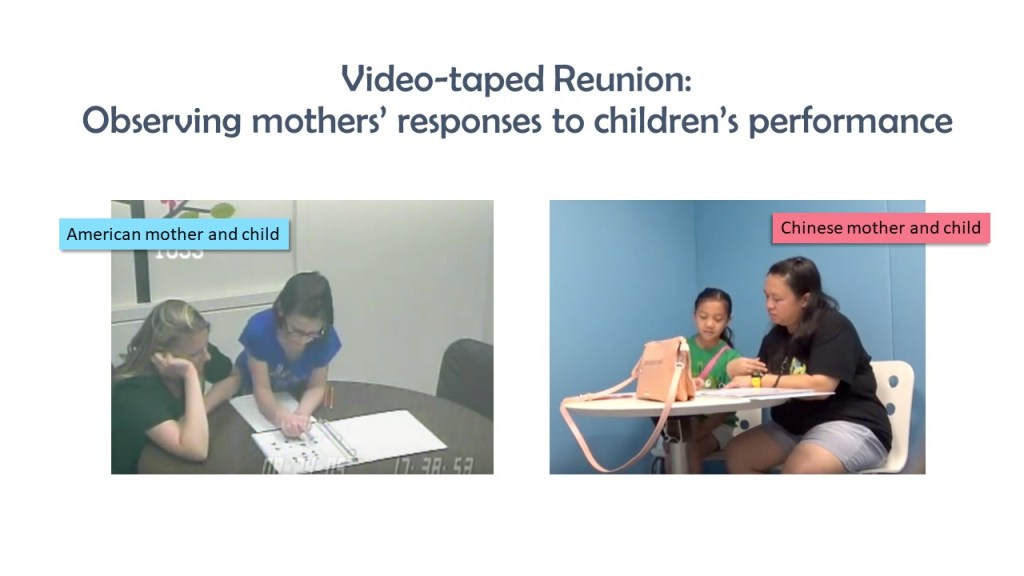
After the reunion…
Statistical Analysis:
Results:

Study 2 – Key Insights
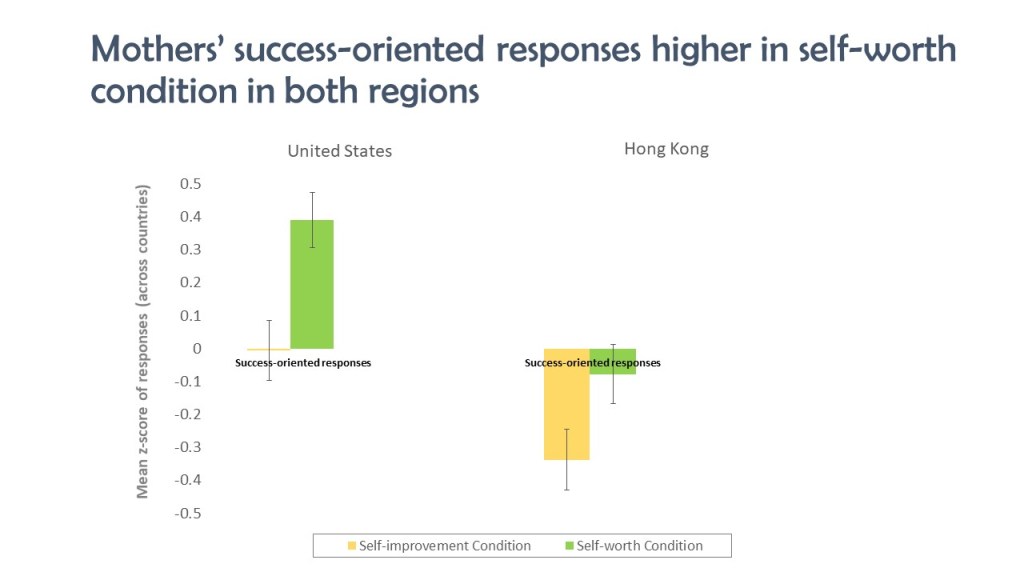
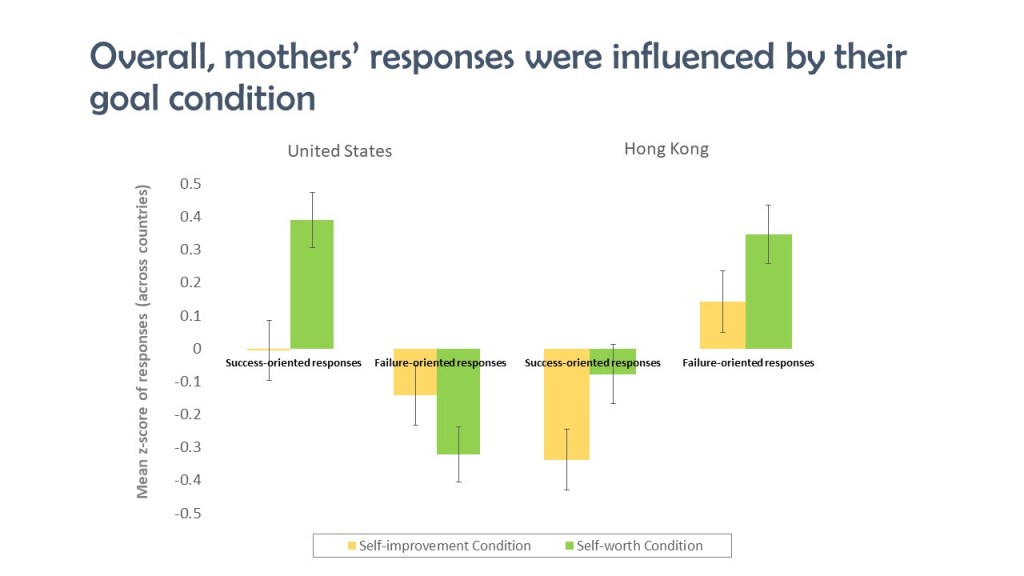
- In line with Study 1 and prior research, American (vs. Chinese) parents were higher in their success-oriented responses and lower in their failure-oriented responses across conditions
- Parents’ responses generally differed by their goal condition
- Both American and Chinese mothers’ success-oriented responses (e.g., praises) were higher if they read the self-worth (vs. self-improvement) brochure
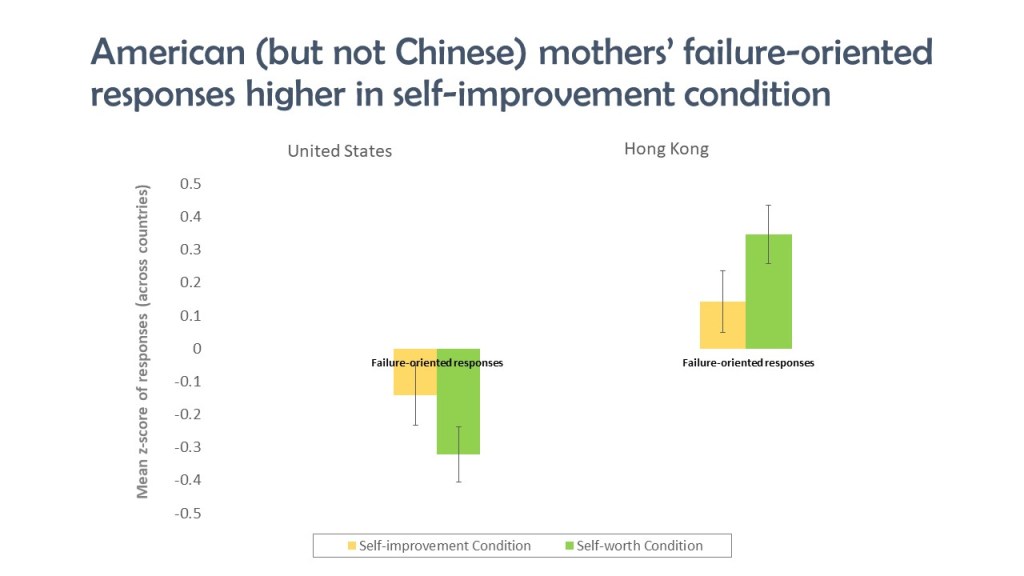
- American parents’ failure-oriented responses (e.g., criticisms) were higher if they read the self-improvement (vs. self-worth) brochure, but not Chinese parents
- It is possible that, given Chinese (vs. American) mothers were higher in their failure-oriented responses to begin with, that they already reached what they considered a maximum for failure-oriented responses as these responses can be quite negative on children – thus they might have been unwilling to increase them in the self-improvement condition
- It is also possible that Chinese mothers were hesitant to lower their failure-oriented responses in the self-worth condition because they see these responses as essential in ensuring children are modest, which is very much valued in East Asian cultures (e.g., Heine et al., 1999)
Overall Key Implications and Recommendations
- The results of studies 1 and 2 support the idea that parents’ goals for their children drive how they respond to children’s performance
- Many studies have found Chinese (vs. American) children to be less happy and more vulnerable to depression and anxiety (e.g., Choi et al., 2006; J. Ng et al., 2019)
- Given that mothers who were exposed to self-worth information were more likely to use success-oriented responses, one way to encourage Chinese parents to use more success-oriented responses may be to support them in placing more importance in children’s self-worth
- Many studies have found American (vs. Chinese) children to be lower achieving (e.g., OECD, 2016) and less engaged in school (e.g., Qu & Pomerantz, 2014), with some research finding failure-oriented responses to benefit children’s academic performance (e.g., F. Ng et al., 2007)
- Given that American (though not Chinese) mothers exposed to self-improvement information were more likely to use failure-oriented response, one way to encourage American parents to use more failure-oriented responses may be to support them in placing more importance in children’s self-improvement
 Janice Ng